
3 Best 18V Cordless Hedge Trimmers Australia – Makita DUH523 vs Bosch UniversalHedgeCut 18 vs DeWalt 18V XR
Your lilly pillies are bursting after summer rain, the extension lead is a trip hazard, and the old petrol trimmer feels heavier every season. If you want quick, clean cuts without fumes or cords, these three 18V trimmers are the Australian sweet spot. For more context on sizing and power before you buy, see our cordless vs petrol hedge trimmer guide and the upgrade path in 40–54V hedge trimmers for larger blocks.
Quick Picks
- Best Overall: DeWalt 18V XR – Confident cutting on Aussie shrubs (lilly pilly, viburnum, photinia) with robust build and larger tooth spacing.
- Best Budget: Makita DUH523 – Lightweight, easy to handle for small to medium hedges; great if you already own Makita 18V LXT batteries.
- Best for Beginners/Quiet Suburbs: Bosch UniversalHedgeCut 18 – Low noise and low vibration feel calmer on strata-sized gardens and weekend tidy-ups.
Shop the contenders
These cards show current pricing and availability on Amazon Australia. Details below explain who each model suits.

Makita DUH523Z 18V Li-Ion LXT 52cm Hedge Trimmer - Batteries and Charger Not Included
$614 on Amazon
Bosch 18V Cordless Brushless Hedge Trimmer Garden Pruner Without Battery, Anti-Blocking System, Cuts Branches of Up to 20mm Thick, Diamond-Ground Blades (UniversalHedgeCut 18V-55). Made in Europe
$235 on Amazon
Dewalt DCMHT563N-XE 18V XR 25mm Hedge Trimmer - Bare Unit
$ on AmazonWho each 18V trimmer suits in Australian gardens
Most suburban hedges here are dense evergreens—lilly pilly (Syzygium), photinia, viburnum, and murraya—often with seasonal flushes that quickly thicken. Coastal gardeners also battle salt air and soft new growth that browns if you tear instead of slice. The right trimmer choice depends on three things: tooth spacing (how thick a stem it can bite), blade length (coverage per sweep), and battery ecosystem (what you already own). If your hedges consistently throw up finger-thick shoots, consider stepping up to 36V/40V systems—our high-voltage hedge trimmer comparison covers that next level.
Makita DUH523 – nimble and budget-friendly for light to moderate hedges
Why it stands out
The DUH523 is popular because it’s simple, light, and works well with existing Makita 18V LXT batteries. It feels less fatiguing on shoulder-high runs and is forgiving if you’re trimming above raised beds or along tight paths. The tooth spacing is on the narrower side, which is exactly why it leaves a clean finish on softer species (murraya, escallonia) and fresh spring growth without chewing.
Real-world use case
Ideal for townhouses or smaller yards doing fortnightly maintenance on hedges up to about chest height. If you keep on top of growth and don’t leave stems to woody pencil thickness, the DUH523 is fast and tidy. I’ve used it along a 15-metre murraya run; the key is sharp blades and frequent touch-ups rather than annual hack-backs.
Pros
- Light weight reduces arm fatigue on ladder-free work.
- Great value tool-only if you already own Makita 18V LXT batteries.
- Clean finish on soft, frequent trims—less browning on new growth.
Cons
- Narrower tooth spacing struggles with older, woodier shoots.
- Brushed motor; not as torquey as newer designs.
- Best suited to regular maintenance rather than major reductions.
Best for
Makita owners wanting a light, inexpensive trimmer for regular tidy-ups on small to medium hedges.
Who should avoid
If you’re routinely tackling neglected lilly pilly with thumb-thick shoots, you’ll work the tool too hard—look to the DeWalt XR here or step up voltage in our higher-voltage hedge guide.
Bosch UniversalHedgeCut 18 – quiet, low-vibration trimming for strata and suburbs
Why it stands out
Bosch leans into comfort. The UniversalHedgeCut 18 has noticeably calm manners—reduced vibration and a muted sound signature. On Australian cul-de-sacs with Saturday noise etiquette, that matters. It’s confidence-building for new users and neat freaks: less chatter, more control along fence lines and around letterboxes.
Real-world use case
If your hedges are mostly soft-to-medium density (viburnum, westringia, diosma) and you want something that won’t annoy neighbours, this is the one. It shines for shaping balls, cubes, and topiary where a steady hand and low vibration deliver straight lines.
Pros
- Low noise, low vibration—great in quiet suburbs and units.
- Ergonomics help maintain steady, straight passes on long faces.
- Fits Bosch 18V Power for All batteries many DIYers already own.
Cons
- Not the brute for older, hard timbered shoots.
- Battery ecosystem smaller for outdoor power tools than trade brands.
Best for
Beginners, strata gardeners, and noise-conscious suburbs doing regular trims on small to medium hedges.
Who should avoid
If you’re reclaiming an overgrown boundary or cutting back after months of rain, choose more muscle like the DeWalt XR or jump to a 36–54V model.
DeWalt 18V XR – stronger bite for woody Aussie growth
Why it stands out
The XR has the most confident bite of this trio. DeWalt’s drivetrain and larger tooth spacing help it chew through slightly older, denser shoots without bogging. For common Australian hedges—lilly pilly and photinia in particular—that extra headroom saves time and keeps edges cleaner with fewer recuts.
Real-world use case
Medium to larger suburban hedges where a monthly trim still throws up firm, pencil-thick shoots. On viburnum, the XR maintains pace and momentum so you finish a long run before the arvo heat picks up.
Pros
- Stronger cutting performance on woodier growth.
- Durable build for frequent, longer sessions.
- Good match if you already run DeWalt XR tools in the shed.
Cons
- A touch heavier than the lightest 18V units.
- Noise and vibration a bit higher than Bosch’s calm demeanour.
Best for
Owners with medium to large hedges, tougher species, or who want margin for occasional hard trims.
Who should avoid
If you’re primarily shaping soft, fine foliage and want the quietest, gentlest feel, the Bosch will feel nicer. If you rarely trim and keep hedges tiny, the Makita can save money.
Side-by-side decision table
| Product | Typical AU price range (tool-only) | Best use case | Main advantage | Main limitation |
|---|---|---|---|---|
| Makita DUH523 | Usually on the budget end for 18V | Regular tidy-ups on small/medium hedges | Lightweight, easy to handle, great value for Makita owners | Narrower tooth spacing – less happy on woody stems |
| Bosch UniversalHedgeCut 18 | Mid-range for 18V kits/tool-only | Quiet suburban trimming, topiary shaping | Low noise and vibration for smooth, straight passes | Less punch on older growth |
| DeWalt 18V XR | Mid-to-upper 18V depending on kit | Medium/large hedges, woodier stems | Stronger bite; time-saving on tougher species | A bit heavier and louder than the others |
How to choose: ecosystem, tooth spacing, and blade length
- Battery ecosystem: Already on Makita LXT, Bosch Power for All, or DeWalt XR? Stick with it and buy tool-only to lift value. If you’re starting fresh and plan to add more outdoor tools, DeWalt’s and Makita’s ranges are broader for tradie-grade gear. See our cross-platform view: battery ecosystems compared.
- Tooth spacing (cutting capacity): Bigger spacing = better on older, harder stems. That’s why DeWalt feels more capable on woody lilly pilly than Makita or Bosch, which reward frequent, light trims.
- Blade length: Longer blades cover more per pass on broad hedges but feel heavier and can be awkward in tight courtyards. Shorter blades are nimbler for topiary.
- Comfort: If you’re noise-sensitive or in strata, Bosch’s calm behaviour is worth it, even if outright power is lower.
Optional add-ons (small upgrades that matter)
A fresh battery and blade care extend runtime and cut quality. Keep it minimal and purposeful:
- Blade lube to reduce sap build-up and browning.
- One higher-capacity battery for continuous runs without waiting.
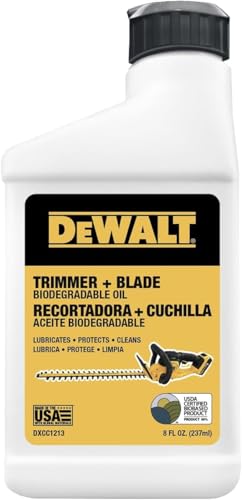
DEWALT Hedge Trimmer Oil – Biodegradable, High-Speed Commercial Blade Lubricant – Eco-Friendly, Rust & Corrosion Protection – 8 oz
$28.14 on Amazon
Makita BL1850B 18V LXT 5.0Ah Li-ion Battery (Genuine, Plain Packaging)
$134 on Amazon
DeWalt DCB184-XE 18V XR 5.0Ah Li-ion Battery
$95 on Amazon
Bosch Professional GBA 18V 4.0 Ah Battery 1600A00163
$115 on AmazonWhat to add next (only if you need it)
If hedges are above head height or along retaining walls, a pole hedge trimmer is safer and faster than a ladder. Compare long-reach options here: battery pole hedge trimmers. For finesse cuts on thick individual shoots you can’t reach with a trimmer, a compact electric pruner helps: battery pruning shears.
FAQs
Will an 18V trimmer handle Australian lilly pilly?
Yes—if you trim regularly. For fresh monthly growth, any of the three will do a neat job. If you let shoots harden to pencil thickness, the DeWalt XR copes better; for neglected hedges, move to higher voltage.
Which is quietest for units and townhouses?
The Bosch UniversalHedgeCut 18 has the calmest noise and vibration profile, making it friendlier for early-morning or strata environments.
Tool-only or kit—what’s better value?
If you already own batteries in the same brand, buy tool-only to save. Starting from zero, kits can be better value than piecing parts together—just ensure the battery capacity suits your hedge length.
How long will a battery last on these trimmers?
Runtime depends on battery capacity, hedge density, and how sharp your blades are. Expect a typical suburban hedge to need one mid-to-high capacity 18V battery. Keeping blades clean and lubricated noticeably extends runtime.
Are these safe for coastal conditions?
Yes, but clean and lubricate blades after salty, windy days to prevent corrosion. A quick wipe-down and lube helps Bosch and Makita in particular keep that crisp cut.
What if I need to reduce hedge height by a lot?
That’s heavy work for 18V. Use a pruning saw or step up to a higher-voltage trimmer for the bulk cut, then maintain with your 18V unit. See our battery vs petrol guide for when to upgrade.
Can I sharpen the blades myself?
You can touch up blades with a fine file, but keep angles consistent and avoid removing too much material. Many Aussie users simply maintain with cleaning and lube, then get a professional sharpen annually.
What blade length should I pick?
Shorter blades are nimbler for tight courtyards and topiary; longer blades cover more area on broad, straight hedges. If in doubt, choose the longer blade and take breaks—it speeds up big runs.
Final take
Pick based on your hedge density, not just price. For quiet, low-stress trims, Bosch is lovely. For tight budgets and lightweight handling on regular maintenance, Makita DUH523 delivers. For tougher Aussie growth and fewer stalls, DeWalt 18V XR is the safe all-rounder. If you later outgrow 18V, jump to our high-voltage hedge comparison or consider adding reach with a pole hedge trimmer.