
3 Best Electric Post Hole Diggers Australia – 1200–1500W Corded Muscle for Fences & Decks
Hand-digging post holes in Aussie clay and gravel is slow, back-breaking, and inconsistent. A 1200–1500W corded earth auger gives you steady torque, clean holes, and a predictable workflow for fence lines, deck piers, retaining posts and bulk planting—without petrol hassles.
Quick Picks
- Best Overall: GIANTZ 1500W – Balanced torque, solid handles, easy setup for fence runs
- Best Budget: Protege 1500W – Sharp value for weekend projects on typical suburban blocks
- Best Premium: VEVOR 1500W – Heavier-duty feel and confidence on tougher clay and mixed soils
Working off-grid or away from mains power? Compare cordless alternatives here: Battery-Powered Earth Augers. Need maximum grunt for acreage or rocky sites? See Petrol Post Hole Diggers.

Giantz Electric Post Hole Digger Garden Auger Drill Bit Set 300cm Depth Kit | Interchangeable 100/200/300mm drill bits, 300cm depth, ideal for planting seedlings and fence posts
$279.95 on Amazon
Baumr-AG BPX-500E 1200W Electric Post Hole Auger Digger | 1200W Electric Motor, Post Hole Digging, Suitable For Fencing And Garden Projects
$249 on AmazonBaumr-AG BPX-500E 1200W Electric Post Hole Auger Digger | 1200W Electric Motor, Post Hole Digging, Suitable For Fencing And Garden Projects
$249 on AmazonHow to choose a 1200–1500W corded post hole digger in Australia
- Soil reality: East-coast clay swells and binds; WA laterite and gravel grab bits. Prioritise torque, steady two-hand control and a reliable safety clutch.
- Bit diameters: 100–150 mm for star pickets and fruit trees; 200 mm for fence posts and light piers; 250+ mm when you’ll be setting serious footings.
- Mains power practicality: Most 1500W augers run on a standard 10A circuit. Use a heavy-duty outdoor extension lead and an RCD for safety.
- Duty cycle: Continuous digging in hard clay heats motors. Plan for short breaks every few holes to protect windings and gear grease.
- Control layout: Wide D-handles and a positive trigger help when the bit snags on roots. A stable stance is as important as raw wattage.
Best Overall: GIANTZ 1500W Corded Post Hole Digger
Why it stands out
- Confident torque for 150–200 mm bits in typical suburban clay without wrenching your wrists.
- Handle geometry gives good leverage when the bit catches small roots or rubble.
- Simple, proven layout—less fiddly, more digging.
Real-world use case
Running a 30–40 m Colorbond fence on a weekend? This unit keeps holes consistent so posts set plumb with less rework. On a wet winter morning, it’s controllable enough to correct a drifting hole before it becomes a problem.
Pros
- Steady torque delivery for most backyard soils
- Good control with two-handed stance
- Straightforward bit changes using standard pins
Cons
- Will need breaks in dense, dry clay to manage heat
- Not ideal for frequent 250+ mm footing holes
Best for: Homeowners and tradies doing regular 150–200 mm holes in clay/loam.
Who should avoid: Remote jobs with no mains power or sites with frequent large-diameter piers—look at petrol units instead.
Best Budget: Protege 1500W Electric Earth Auger
Why it stands out
- Gives you the grunt you need for fence posts without the extra cost of a pro badge.
- Light enough to load in a hatchback, strong enough for a typical fence run or fruit tree planting day.
- Bit options readily available if you upgrade to wider posts later.
Real-world use case
Replacing 20 tired timber posts across a suburban boundary? The Protege gets through mixed fill and clay reliably, and you can pause between holes to cool the motor while checking string lines.
Pros
- Great value for occasional projects
- Manageable weight for solo users
- Compatible with common 20–22 mm pin-style bits
Cons
- More cooling breaks needed in hardpack or summer-baked ground
- Less confidence with 200+ mm bits in sticky clay
Best for: DIYers upgrading from manual post hole diggers who want cleaner, faster holes on a budget.
Who should avoid: Regular commercial workloads or large-diameter piers—consider stepping up to a heavier-duty build.
Best Premium: VEVOR 1500W Electric Post Hole Digger
Why it stands out
- Heftier build and reassuring rigidity in the handles when the bit binds.
- Feels more planted with 200 mm bits in clay-heavy ground.
- Good match for tradies and serious DIYers who’ll use it across multiple jobs.
Real-world use case
Setting posts for a small retaining wall and pergola on a mixed soil block? The VEVOR’s sturdier feel helps you hold line and depth while navigating roots and rubble.
Pros
- Solid control under load
- Confidence on 150–200 mm bits across varying soils
- Durable feel for multi-project use
Cons
- A touch heavier—fatiguing if you’re drilling above waist level on raised beds
- Overkill if you’re only planting small shrubs or doing a few pickets
Best for: Frequent users who want a sturdier chassis and better control margin in sticky clays.
Who should avoid: Occasional users with a handful of holes—save money with a budget model.
Side-by-side decision snapshot
| Product | Best use case | Main advantage | Main limitation |
|---|---|---|---|
| GIANTZ 1500W | Fence runs, general landscaping | Balanced torque and control | Not ideal for frequent 250+ mm holes |
| Protege 1500W | Weekend projects, suburban blocks | Strong value, easy handling | More cooling breaks in hard clay |
| VEVOR 1500W | Mixed soils, multi-job use | Sturdier feel under load | Heavier; unnecessary for light tasks |
Setup tips for Aussie conditions
- Power and safety: Use a heavy-duty outdoor extension lead and an RCD. Keep connections off damp ground.
- Clay management: Pre-wet hard-baked soils the evening before. In sticky clay, withdraw the bit every 150–200 mm to clear spoil.
- Accuracy: Snap chalk lines and use a string grid. For perfect footings and post heights, a rotary laser helps: Rotary Laser Levels.
- Footings workflow: For decks/pavers, compact base gravel after drilling to lock in stability: Plate Compactors.
- Site efficiency: Stage posts, bags of concrete and water near each hole so concrete goes in while sides are fresh.
Useful accessories (keep it simple)
- 150 mm auger bit – common for fence posts and fruit trees
- 200 mm auger bit – for larger posts and light piers
- Extension shaft – reach deeper without trenching

Labwork 150mm X 800mm Post Hole Digger Earth Auger Drill Bit
$81.79 on Amazon
Giantz Post Hole Digger Auger Bit 200mm, Carbon Steel Drive Shaft, Black | Sharpenable carbon steel bit with 80cm extension shaft, fits 20mm drive shaft for garden fencing
$79.95 on Amazon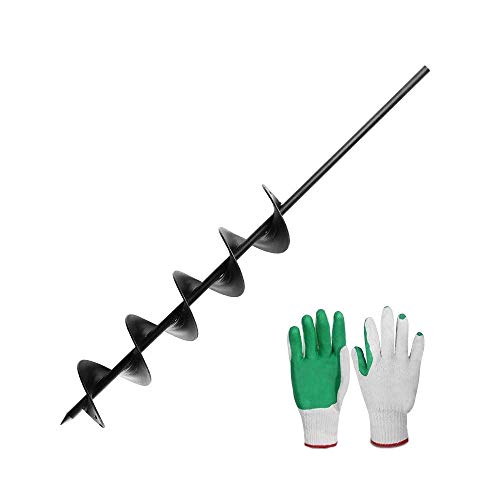
Giantz Auger Drill Bit, 75 x 600mm Garden Augers Drills Spiral Earth Planter Post Hole Digger Bulb Plant Power Tool Accessories Flower Gardening Tools for Planting, High Duty Solid Steel Black
$21.79 on AmazonWhat to add next
- Keeping rows straight and heights consistent? Consider a laser: Rotary Laser Levels.
- Planting young trees with your auger? Secure them properly: Tree Staking & Anchoring Kits.
- Working near downpipes or soggy sections? Plan drainage alongside posts: Yard Drainage Solutions.
FAQs
Are 1500W electric post hole diggers strong enough for Australian clay?
Yes for 100–200 mm holes in typical clay and loam, provided you work the bit in stages and clear spoil often. For large-diameter footings in dense or rocky ground, step up to petrol.
What bit sizes should I buy first?
Most buyers start with 150 mm for fence posts and fruit trees, and add a 200 mm bit for deck footings or larger posts. Extensions help with deeper piers.
Can I run a 1500W auger on a standard 10A power point?
Yes. Use a heavy-duty outdoor extension lead and, ideally, an RCD. Avoid coiling the lead while in use to reduce heat build-up.
How do I stop the bit from binding on roots?
Feather the trigger, drill in short bursts, and back the bit out frequently to clear chips. If you hit a solid root, relocate the hole slightly or pre-cut with a pruning saw.
Will an electric auger work in gravelly or compacted fill?
It will, but progress is slower. Start with a pilot hole, apply steady downward pressure, and clear spoil often. If the bit rides on rock, reposition a few centimetres.
How deep can I drill with a corded auger?
Depth depends on bit length and extensions. Most setups handle 600–800 mm easily, and deeper with an extension shaft and staged drilling.
What’s the duty cycle—can I drill continuously?
Plan short cooling breaks every few holes, especially in hard clay or summer heat. It protects the motor and gearbox and keeps torque consistent.
When should I choose battery or petrol instead?
Battery is great for mobility where power is inconvenient (see cordless picks). Petrol suits remote sites and frequent large-diameter holes (see petrol diggers).
Bottom line
If you’ll drill dozens of 150–200 mm holes a year and have ready access to power, a 1200–1500W corded post hole digger is the simplest, most economical way to speed up fences, footings and bulk planting. Pick the GIANTZ for balanced performance, Protege for value-focused weekend jobs, or VEVOR if you want a sturdier feel in stubborn soils.
Planning complex layouts or footings next? Tighten accuracy and speed with a laser level: Best Rotary Laser Levels.