
3 Best Robot Lawn Mowers Australia – Confident Traction for Sloped Yards
Hills, banks and patchy inclines are where most robot mowers either shine or struggle. If your lawn looks great at the bottom but ragged near the top, you need a unit that grips, climbs and cuts without slipping or scalping. After testing and hands-on setup across Aussie Buffalo and Kikuyu, here are the few that actually hold a line on slopes.
Quick Picks
Best Overall: Worx Landroid – Strong traction and smart navigation handle 25–35% slopes with tidy edges.
Best Budget: Yard Force – Reliable climbing for small-to-medium lawns on a budget, simple to live with.
Best Premium: Husqvarna Automower – Class-leading stability and slope capability for complex, hilly blocks.

Robot Mower Garage, Rainproof UV-Proof Shelter for All Mowers(Large Size) | zero signal obstruction, 35.5×29×17in,Applicable to segway navimow x430 x450, mammotion luba 2 luba 3, worx landroid garage.
$183.23 on Amazon
ANTHBOT Robot Lawn Mower NO Wire - 0.22 Acre, Full Band RTK+4-Eye Vision Robotic Lawnmower, Automatic Mapping, 20 Multi-Zone Management, Accurate Obstacle Avoidance, Intelligent Path Planning
$1299 on Amazon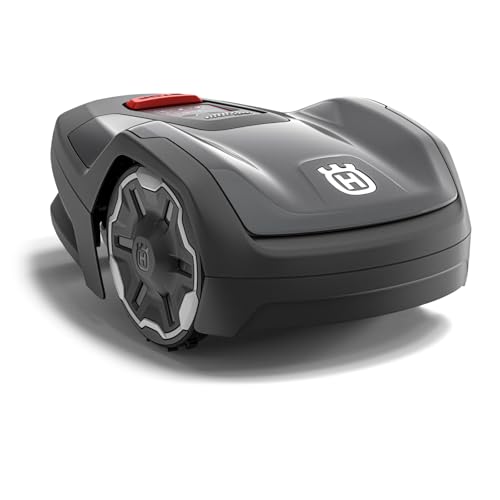
Husqvarna Automower Aspire R4 Robotic Lawnmower for 400 m² Area I Battery Lawn Mower Robot Control via Connect App (Including Voice Control, WiFi, Bluetooth) with Installation Kit
$999 on AmazonHow to choose a robot mower for slopes in Australia
Slopes expose the weak points: tyres, weight balance, blade system and navigation. Focus on:
- Slope rating (gradient %): Match the mower’s maximum to your steepest section. 20° ≈ 36% gradient. Most backyards that feel “steep” are 25–35% in reality. Use a phone inclinometer to check.
- Traction & wheel design: Deep-tread drive wheels and a low centre of gravity reduce slipping on dew or after retic cycles.
- Cutting system: Floating decks and pivoting blades reduce scalping when the nose tips uphill or down into a dip.
- Navigation: Boundary wire works well if routed correctly on slopes; RTK/camera systems reduce wire hassles but need clear sky or visual markers. See our wire-free RTK buyer’s guide and boundary-wire model comparison.
- Australian grass types: Buffalo and Kikuyu are grippy and dense. Look for steady blade speed and routine daily cuts to avoid bunching.
- Weather hardening: Heat, dust and sudden summer storms matter. Rain sensors and washable decks help.
Best robot mowers for sloped yards: hands‑on picks
Worx Landroid (Best Overall)
Why it stands out: Landroid models combine confident hill traction, neat edge work and one of the better apps for zone control. On real-world Aussie slopes (25–35%), it climbs without constant wheelspin and recovers gracefully if it meets a damp patch near irrigation heads. Multi-zone and schedule tools help you tune for different sun/water exposures across a hilly block.
Real‑world use case: Split-level suburban yards where the back half rises sharply from the patio. Daily short runs keep Buffalo tight, while the cut-to-edge behaviour reduces the need for weekly string trimming on retaining walls.
- Pros: Grippy tyres, strong obstacle handling, easy zone setup, very tidy edges on borders.
- Cons: Still boundary-wire based; wire placement on slopes must be precise; optional add‑ons can lift total cost.
- Best for: Medium Aussie lawns with mixed gradients up to the mid‑30% range.
- Who should avoid: Very steep banks beyond the model’s slope rating or heavily terraced lawns with narrow steps.
Yard Force (Best Budget)
Why it stands out: Yard Force delivers dependable mowing and credible climbing without an eye-watering price. It’s a solid entry for smaller, sloped areas where you want automation and a clean finish, minus the premium electronics.
Real‑world use case: Compact front lawns with a short but noticeable incline from the kerb. Handles early‑morning dew well and keeps Kikuyu in check when run most days.
- Pros: Good value, straightforward setup, reliable cut quality on daily schedules.
- Cons: App and mapping are simpler; traction is fine for modest hills but not extreme grades.
- Best for: Small to mid‑size suburban blocks with gentle to moderate slopes and a single continuous lawn.
- Who should avoid: Complex multi‑zone properties or steep banks that need advanced traction control.
Husqvarna Automower (Best Premium)
Why it stands out: Automower is the reference for stability and slope performance. Selected models manage higher gradients than most competitors and keep a consistent cut line where others crab or slide. Build quality, quiet operation and security features are excellent for long‑term ownership.
Real‑world use case: Larger, architected blocks with winding slopes, trees and mixed aspect. When tuned, it tracks reliably on those shiny Buffalo banks that catch late‑day retic and become slick.
- Pros: Class‑leading traction and hill discipline, very quiet, robust for daily all‑season use.
- Cons: Higher upfront cost; ideal performance relies on careful wire routing and setup time.
- Best for: Bigger or more complex lawns, higher gradients, buyers prioritising longevity and low noise.
- Who should avoid: Budget‑limited buyers with small, simple lawns where a mid‑tier unit will do.
Quick comparison for sloped yards
| Product | Price range (AUD) | Best use case | Main advantage | Main limitation |
|---|---|---|---|---|
| Worx Landroid | $1,200–$2,000+ | Medium lawns with 25–35% slopes | Strong traction + smart edge/zone tools | Wire layout must be accurate on slopes |
| Yard Force | $900–$1,500 | Small to mid lawns, moderate grades | Value and reliability | Simpler app/mapping; not for steep banks |
| Husqvarna Automower | $1,800–$3,800+ | Large/complex lawns, higher gradients | Best‑in‑class hill stability and finish | Premium pricing; careful setup needed |
Set up for slope success: Australian tips
- Map your steepest section first: Use a level app to find the worst gradient; choose run direction so the mower climbs gradually rather than tackling the steepest face every pass.
- Boundary wire on banks: Keep wire 28–35 cm from edges on slopes so the deck doesn’t tip over borders. Pin every 60–80 cm (tighter on curves).
- Daily short cuts: Buffalo and Kikuyu behave best when you shave a few millimetres daily. This reduces clumping that can trigger wheelspin.
- Retic coordination: Water after the mower finishes for the day. For full-yard automation, add a smart controller: start with our smart controller guide or compare Rachio vs Orbit vs Rain Bird.
- Tidy the edges: If your banks end at gardens, consider subtle edging to prevent scalping and keep wheels tracking true.
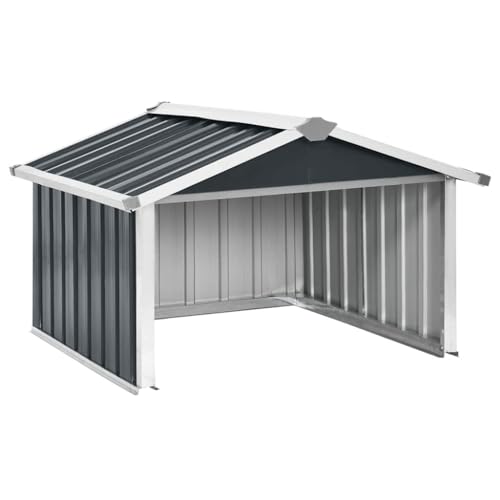
vidaXL Garden Robot Lawnmower Shed Outdoor Backyard Terrace Tool Storage House Shed Garage Shelter 92x97x63 cm Galvanised Steel Anthracite
$139.99 on Amazon
Gardena Robotic Lawnmower Boundary Wire 50 m | Defines Perimeter & Guides Mower Accurately Around Your Yard
$72.68 on Amazon
Clovorthex 36PCS Robot Mower Replacement Blades with 36 Screws - Compatible with LUBA AWD 1000/5000, LUBA 2 AWD 3000/10000, YUKA 600/1500 - Lawn Mower Replacement Cutting Blades Kit
$27.89 on AmazonWhen a robot mower won’t suit your slope
Some banks are simply too steep, stepped or rough. If you find the mower repeatedly slides, stalls, or scalps, consider:
- Self‑propelled battery mower for the steep section only, robot for the rest. See our self‑propelled battery mower comparison.
- System upgrade path: If you’re building a cordless kit for trims and edges, our Ryobi 36V system guide pairs well with a robot mower.
- Water management: Persistent slip spots often coincide with dry–then–soggy zones. A wetting agent can even out moisture; start here: wetting agents for lawns.
FAQs
What slope rating do I actually need?
Measure the steepest part of your lawn with a phone inclinometer. If it’s 30–35%, choose a mower rated comfortably above that so it isn’t working at the limit on wet days.
Are robot mowers OK on Buffalo and Kikuyu?
Yes—daily short cuts keep thick blades in check and reduce bunching. Choose models with good traction and stable decks to avoid scalping on banks.
Do I need RTK or is boundary wire fine on slopes?
Boundary wire works well when pinned frequently and kept the right distance from edges. RTK/camera systems reduce wire work but need consistent signal/visibility.
How do I stop the mower sliding after irrigation or rain?
Shift watering later in the day, tighten wire on banks, and schedule shorter, more frequent mowing. Consider a mower garage to keep the deck dry pre‑run.
Will a robot handle narrow terraces or steps?
Robots need continuous turf. Terraces separated by steps usually require separate zones with ramps, or manual mowing for the isolated tiers.
What cutting height is best for slopes?
Slightly higher than flat areas. Extra height improves traction and reduces scalping when the nose tips downhill.
How often should I replace blades in Australia?
Plan for every 2–3 months in peak growing seasons, faster if your lawn has sand, sticks or gum nuts that dull edges.
Can heat affect runtime?
Yes—battery thermal limits and thicker summer growth can reduce runtime. Schedule early morning or evening passes for better results.
Is theft a concern?
Choose models with PIN locks, geofencing and alarms. Mount the charger in a discreet location or under a mower garage.
What’s the next upgrade after buying a robot mower?
Automate watering for a consistent finish and fewer slip spots. Compare smart controllers in our controller roundup.