

Best Cordless Garden Tillers & Cultivators Australia 2026: Battery-Powered Models for Clay, Raised Beds & Weeds
Cordless garden tillers and cultivators have become practical alternatives to petrol machines for many Australian home gardens. Modern brushless motors and higher-voltage battery systems deliver useful digging and cultivation power without petrol, exhaust fumes, engine servicing or pull-starting. Depending on the model, cordless tillers can be useful for raised garden beds, vegetable gardens, soil mixing, weeding and breaking up compacted ground.
For Australian gardeners, the right battery-powered tiller depends on the size of the garden, soil conditions and whether you already own cordless tools. Lightweight 18V–20V cultivators are suited to smaller garden beds, while 36V–40V and higher-voltage systems are better suited to tougher soil and larger areas.
If you're building a full garden system, combine soil preparation with our self-watering raised bed kits or improve growth after tilling using smart irrigation systems.
Best Cordless Garden Tillers for Every Garden Size
18V–20V Cordless Tillers for Small Gardens
Lightweight 18V and 20V cultivators are ideal for raised beds, vegetable gardens, herb gardens and lighter soil work. They prioritise control and manoeuvrability over maximum digging power, making them particularly useful when working between established plants or in smaller garden spaces.
Compare 18V–20V cordless tillers on Amazon Australia
36V–40V Cordless Tillers for Most Australian Home Gardens
36V and 40V cordless tillers offer a useful balance between power, weight and runtime. They are a good all-round category for larger vegetable gardens, established garden beds and mixed soil conditions where a small 18V cultivator may struggle.
Compare 36V–40V cordless tillers on Amazon Australia
54V–60V Heavy-Duty Tillers for Clay & New Ground
Higher-voltage cordless systems can provide significantly more torque for demanding cultivation work. They are the category to consider when dealing with compacted Australian soil, heavy clay, established beds or ground that has not been cultivated for some time.
Compare heavy-duty cordless tillers on Amazon Australia
Best-Selling Cordless Garden Tillers on Amazon Australia
Looking for a cordless garden tiller or cultivator? These popular battery-powered options are worth comparing on Amazon.com.au. If you already own batteries from a major cordless tool system, choosing a compatible cultivator can also be a convenient way to avoid buying another battery and charger.
Ryobi-Compatible Cordless Garden Tillers — Popular for Home Gardens
Already using Ryobi batteries? A compatible cordless cultivator can be a convenient option for raised beds, vegetable gardens, weeding and general soil preparation around the home.

Cordless Tiller Cultivator Compatible with Makita 18V Battery (Tool Only), 450RPM Electric Tiller for Gardening, 9"x6.3" Tilling, 48 Reinforced Steel Tines Rototiller for Lawn/Soil Cultivation
$100.09 on AmazonMakita-Compatible Cordless Garden Tillers — Great for Existing Battery Owners
Already have Makita batteries? A compatible cordless tiller can let you expand your existing battery system without needing another petrol-powered machine for smaller cultivation jobs.
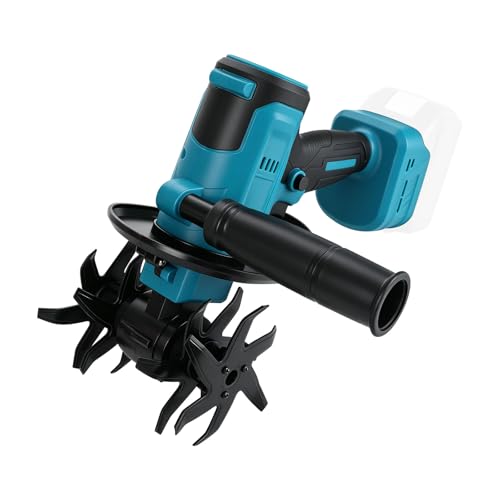
Cordless Handheld Cultivator Compatible with Makita 18V Battery
$81.26 on AmazonDeWalt-Compatible Cordless Garden Tillers — For DeWalt Battery Users
Already invested in DeWalt batteries? A compatible cordless cultivator can be useful for maintaining garden beds, mixing soil and tackling lighter cultivation work without petrol or engine maintenance.
How to Choose the Right Cordless Garden Tiller
- 18V–20V: Raised beds, vegetable gardens, light soil and maintenance work
- 36V–40V: Best all-round category for most home gardens
- 54V–60V: Tougher soil, clay, compacted ground and heavier cultivation
- Brushless motor: Generally offers better efficiency, torque and motor longevity
- Battery capacity: Larger Ah batteries generally provide longer runtime, although they also add weight
- Battery platform: If you already own compatible batteries, a tool-only model can be considerably better value
- Tine width: Wider tillers cover more ground, while narrower cultivators are easier to use around established plants
- Cultivation depth: Choose a model with enough depth for the type of soil preparation you actually need
Cordless Garden Tiller Comparison Table (Australia 2026)
| Voltage | Best For | Typical Depth | Weight | Typical Runtime | Typical AU Price |
|---|---|---|---|---|---|
| 18V–20V | Raised beds & light cultivation | 75–150 mm | Light | 20–35 min | Approx. A$150–A$300 |
| 36V–40V | Most home gardens | 100–200 mm | Medium | 25–45 min | Approx. A$250–A$600 |
| 54V–60V | Clay & heavy cultivation | 150–250 mm+ | Heavy | 20–40 min | Approx. A$450–A$900+ |
Prices, runtime, weight and cultivation depth vary substantially between models, battery sizes and whether the battery and charger are included. Check the individual product listing for current Australian pricing and specifications.
Best Garden Setup Combinations
- Raised beds: 18V–20V cultivator + quality compost + drip irrigation
- Standard home garden: 36V–40V tiller + compost or soil amendment
- Clay soil: 54V–60V tiller + multiple shallow passes + suitable soil amendment
- Existing battery system: Choose a compatible cultivator to share batteries and chargers with your other garden tools
Using a Cordless Tiller in Australian Soil
Australian garden soils can vary dramatically between regions. Sandy coastal soils may require less power but can dry out quickly, while heavy clay can become extremely hard when dry and sticky when wet. The best results usually come from cultivating when the soil has suitable moisture rather than attempting to force a cordless tiller through rock-hard or waterlogged ground.
For heavy clay, work gradually and avoid trying to reach maximum depth in a single pass. Several shallower passes can place less load on the motor and battery while producing a more workable soil structure.
FAQs
Can cordless tillers handle Australian clay soil?
Yes, but the result depends heavily on the machine, battery system and soil condition. Higher-torque 36V–60V models are generally better suited to dense clay than lightweight 18V–20V cultivators. Extremely hard or compacted ground may still require multiple passes or initial preparation with a heavier machine.
What’s the best voltage for a home garden?
For most Australian home gardens, 36V–40V is a useful balance of power, weight and runtime. An 18V–20V cultivator can be a better choice for raised beds and light work, while 54V–60V models make more sense for demanding cultivation.
Are cordless tillers better than petrol tillers?
Not necessarily for every job. Cordless models are quieter, easier to start and require less routine maintenance, making them particularly convenient for residential gardens. Petrol machines can still have an advantage for prolonged heavy-duty cultivation and very hard ground.
How long does a cordless tiller battery last?
Runtime varies with battery capacity, soil hardness, cultivation depth and the machine itself. Around 20–45 minutes of active work is a reasonable general guide for many cordless models, but larger batteries can extend working time.
Can I use my existing lawn-tool batteries?
Sometimes. Battery compatibility is normally limited to the same manufacturer and compatible voltage/platform. Always check the exact tool requirements before buying a tool-only cultivator. A battery from one platform should not be assumed to work with another brand.
Are cordless cultivators good for raised garden beds?
Yes. Lightweight cordless cultivators are particularly useful in raised beds because they are easier to manoeuvre around plants and don't require a power cord. They can be useful for mixing compost, loosening soil and controlling weeds.
Conclusion
Cordless garden tillers and cultivators are now a practical option for many Australian gardeners. Lightweight 18V–20V models are best suited to raised beds and light cultivation, while 36V–40V machines provide a stronger all-round option for most home gardens. For heavy clay, compacted ground and more demanding cultivation, higher-voltage 54V–60V systems are worth considering.
If you already own a cordless tool ecosystem such as Ryobi, Makita or DeWalt, checking for a compatible garden cultivator can also be one of the most cost-effective ways to move away from petrol-powered garden equipment.