
Hunter MP Rotator vs Rain Bird R‑VAN Rotary Nozzles Australia – Which Retrofit Delivers Better Coverage and Water Savings?
Patchy lawns, wind blowing spray off the footpath, and council water restrictions—this is where rotary nozzles earn their keep. If you're upgrading old misty sprays on a typical Aussie block, your shortlist quickly becomes Hunter MP Rotator or Rain Bird R‑VAN. Let’s cut through the marketing and work out which will solve your coverage and water bill problems fastest.
For pressure and over‑spray fixes, pair your choice with pressure‑regulated pop‑ups for a proper retrofit. See PRS spray head retrofit guide and, if you’re automating zones, our 24VAC smart controller comparison.
Quick Picks
- Best Overall: Hunter MP Rotator – Excellent uniformity in wind, broad model range for tight/narrow spaces, proven efficiency.
- Best Budget: Rain Bird R‑VAN – Often sharper pricing per nozzle, tool‑free adjustment speeds up installs.
- Best for Beginners: Rain Bird R‑VAN – Twist‑to‑set arc and radius; easy to dial in without a key.

Hunter MP800SR 90° - 210° Short Radius Rotator 6' to 12' (1.8m to 3.6m) Female MP800SR90 5 Pack
$73.97 on Amazon
Rainbird R-VAN14 8-14 ft. Adjustable Rotary Nozzles RVAN14 (45 to 270 Degree) (5pcs in a Bag)
$47.54 on AmazonWhy rotary nozzles make sense in Australia
Compared with standard sprays, rotary nozzles throw fewer, thicker streams that travel further with less drift. They’re built for the realities of Aussie yards—sea breezes in coastal suburbs, hot northerlies inland, and mixed soils from WA sand to VIC clay. Expect lower precipitation rates (roughly 10–15 mm/hr) so water soaks in instead of running down the driveway. Yes, run times get longer, but overall litres used usually drop, and coverage is typically more even.
Hunter MP Rotator – Real‑world performance
Best Overall for windy sites and mixed‑shape lawns
Why it stands out
- Strong wind performance: multi‑stream pattern holds up when seabreezes kick in.
- Huge range: from tight strips (MP Strip, MP Corner) to 9 m arcs (MP3000), so you can keep one family of nozzles across the whole yard.
- Dialled uniformity: consistent matched precipitation when you mix arcs and radii across a zone.
- Optimised at ~40–45 psi: pairs perfectly with PRS40 spray bodies for set‑and‑forget pressure.
Real‑world use case
If you’re replacing old sprays along a Perth limestone driveway and open front lawn that catches wind, MP Rotators tame overspray straight away. On buffalo and kikuyu where you want deep watering without runoff, set two or three cycles to hit your weekly target and you’ll see fewer dry patches at the head‑to‑head overlaps.
Pros
- Excellent distribution uniformity for rectangular and irregular beds.
- Broad model set reduces awkward mixing of different brands.
- Good close‑in watering reduces donut dry spots near heads.
Cons
- Adjustment needs a tool; slower for quick dial‑ins.
- More sensitive to dirty water than basic sprays—flush new lines and use the filter screens.
Best for
Coastal suburbs, breezy backyards, and any zone where you want one nozzle family to cover strips, corners, and open lawn consistently.
Who should avoid
If you want the fastest, tool‑free setup or you rarely deal with wind, Rain Bird R‑VAN can be simpler.
Rain Bird R‑VAN – Real‑world performance
Best Budget and easiest setup
Why it stands out
- Tool‑free adjustment: twist to set arc and radius—handy for builders and DIYers.
- Strong near‑head coverage: reduces those annoying dry rings.
- Competitive price per nozzle in AU; multi‑packs often good value.
- Performs best around 40–45 psi with PRS40 pop‑ups.
Real‑world use case
Retrofitting an older zone in Adelaide with mixed bed shapes? R‑VAN speeds the job: stand up, twist, and you’re done. It’s also forgiving when you’re matching arcs across a few odd corners without pulling out a key.
Pros
- Quick, tool‑free setup and seasonal tweaks.
- Solid performance for general suburban blocks.
- Often cheaper per nozzle than Hunter equivalents.
Cons
- Model range isn’t as extensive for specialty strip shapes as Hunter’s.
- Like all rotary nozzles, needs clean water and pressure control to shine.
Best for
DIY retrofits and tradies who prioritise speed and easy fine‑tuning on site.
Who should avoid
Very windy, open sites where you’ll value Hunter’s pattern rigidity and larger specialty lineup.
Direct comparison: MP Rotator vs R‑VAN
| Product | Price range AUD (per nozzle) | Best use case | Main advantage | Main limitation |
|---|---|---|---|---|
| Hunter MP Rotator | $15–$25 | Wind‑prone, mixed‑shape lawns, full family coverage | Excellent uniformity, huge model range | Needs tool to adjust; keep lines clean |
| Rain Bird R‑VAN | $14–$22 | Fast DIY retrofits and seasonal tweaking | Tool‑free adjustment, sharp value | Fewer specialty shapes than Hunter |
If you’re building a zone from scratch or fighting coastal winds, Hunter’s consistency and model coverage usually wins. If you’re swapping a handful of heads and want quicker on‑site tuning, R‑VAN is hard to beat on speed and price. Either way, you’ll get the efficiency boost over old sprays—as long as you control pressure.
Coverage and sizing: get the spacing right
- Typical radius: Hunter MP series spans roughly 2.5–9 m across different models; Rain Bird R‑VAN covers roughly 2.4–8.5 m. Check the specific nozzle chart for your arc and radius.
- Head‑to‑head spacing: Aim for each stream to reach the next head (not just the middle). This is critical for even results on hot Australian days.
- Pressure matters: Rotary nozzles look their best at ~40–45 psi (2.8–3.1 bar). If your retic runs at different pressures between zones, regulate at the head or valve.
- Match arcs in a zone: Keep all nozzles in a zone as rotarys (don’t mix with standard sprays) and maintain matched precipitation.
Recommended accessories to finish the job
These additions protect your investment and usually cost less than a call‑back:
- Pressure‑regulated pop‑ups (40 psi) under each nozzle.
- 40 psi valve or inline regulator for the whole zone if your mains pressure is high or variable.

Hunter PRS40 Pro-Spray for MP Rotators PROS-04-PRS40-CV
$33.12 on Amazon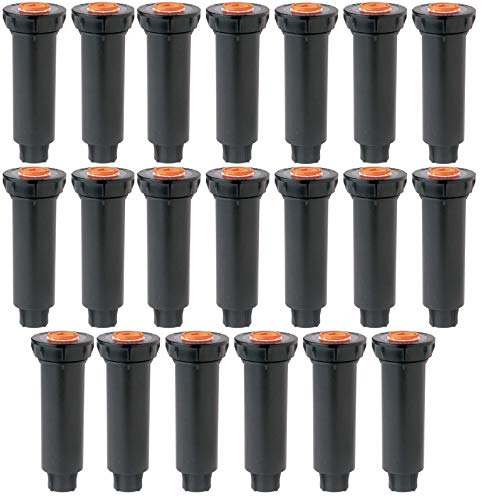
Rain Bird 1800 Series Pop-Up Sprinklers 4" 1804 Lot of 20
$82.92 on Amazon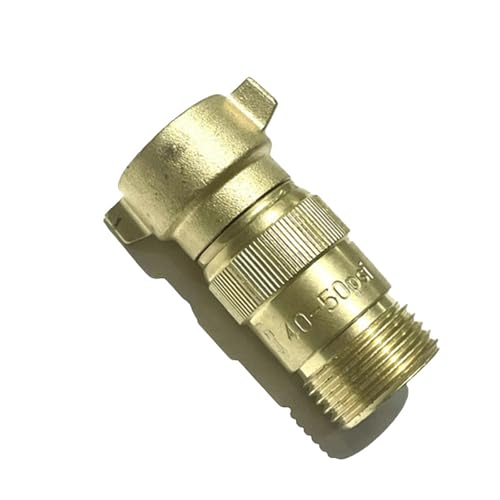
Brass Garden Water Pressure Regulator Valve with Filter Screen, 40-50 PSI Pressure Reducer for Outdoor Faucet Sprinkler System (3/4 Inch)
$22.2 on AmazonFor bigger system upgrades, see our guides on high‑efficiency rotary retrofits, flow meters and leak detection, and a whole‑yard pressure/filtration stack.
Installation and setup tips for Aussie conditions
- Flush first: Before fitting nozzles, run each lateral to blow out PVC shavings and sand. Pop the filter screen back in last.
- Use PRS bodies on slopes: Rotary nozzles run longer; PRS shuts down misting and reduces low‑head drainage.
- Bore water? Expect iron/sediment. Add proper filtration at the manifold and clean screens seasonally.
- Wind window: If you can, schedule watering for early morning. Rotary streams already help; timing finishes the job.
Run times and scheduling
Rotary nozzles put water down gently. In many Australian lawns that means 30–60 minutes per zone, often split into 2–3 shorter cycles to avoid runoff on clay. Start with manufacturer charts, then do a catch‑cup test to dial in 10–15 mm per watering day. If you automate, a smart controller with local weather data helps here—see our best smart controllers.
What I’d buy for common Australian scenarios
- Windy coastal lawn (Buffalo/Kikuyu): Hunter MP Rotator across the board with PRS40 pop‑ups.
- Quick DIY retrofit on a rental: Rain Bird R‑VAN for tool‑free setup; upgrade a few worst heads first.
- Mixed beds + narrow strips: Hunter MP family (strip + corner + standard models) to keep zones matched.
If your yard is bigger and you’re debating stepping up to rotors instead, compare throw distances and flow in our pop‑up rotor comparison, or map out a full automation plan with this complete irrigation automation guide.
FAQs
Do I need pressure‑regulated spray bodies for MP Rotator or R‑VAN?
Yes—both perform best around 40–45 psi. PRS40 pop‑ups lock in pressure, cut misting, and improve uniformity, especially with windy or high‑mains suburbs.
Can I mix MP Rotator and R‑VAN in the same zone?
It’s not recommended. While both are “matched precipitation” within their own ranges, mixing brands can throw off distribution and scheduling.
How far should I space rotary nozzles?
Design for head‑to‑head coverage—each nozzle’s outer throw should reach the next nozzle. This keeps coverage even in heat and wind.
Are rotary nozzles okay for narrow garden strips?
Yes. Hunter’s MP Strip and Corner models excel here. R‑VAN has options too, but Hunter’s specialty range is broader for tricky shapes.
Will my water bill actually drop?
Usually, yes. Even with longer run times, rotary nozzles apply water slowly, reducing runoff and overspray. Expect better plant uptake and fewer puddles.
Do I need a filter if I’m on bore water?
Strongly recommended. Fit filtration at the manifold and clean nozzle screens seasonally. Iron and sand will clog any precision nozzle over time.
What runtime should I start with?
Start around 35–45 minutes per zone (split into 2–3 cycles) and adjust using a catch‑cup test. Soils vary widely across Australia, so verify on site.
Which is better in wind: MP Rotator or R‑VAN?
Both beat standard sprays. In consistently windy, open sites, MP Rotator patterns generally hold form a bit better.
Can I run rotary nozzles on the same zone as old sprays?
No. Separate them. Rotarys have much lower precipitation rates; mixing causes under‑ or over‑watering.
Should I upgrade my controller when I switch to rotary nozzles?
It’s optional but useful. Smart controllers handle longer cycle/soak programs and weather adjustments well, improving savings and plant health.
Bottom line
For most Australian retrofits, you’ll get a big step up in coverage and water efficiency from either Hunter MP Rotator or Rain Bird R‑VAN. Choose Hunter if you need bulletproof uniformity across mixed shapes and windy areas. Choose R‑VAN if you value tool‑free setup and sharp pricing. Whichever way you go, lock in pressure regulation to make the upgrade stick.
Next steps: optimise pressure with our PRS guide and automate scheduling via the best smart controllers.