
Pond Waterfall Pumps Australia (10,000–20,000 L/h): Reliable High-Head Picks for Streams & Cascades
Building a natural-looking stream or cascade in an Australian garden needs the right pump: one that can push water up to your spillway with enough flow to create the look and sound you want, run 24/7 through summer heat, and handle leaves and pond debris. This guide focuses on pond waterfall pumps in the 10,000–20,000 L/h range with higher head capability for Aussie backyards.
Quick Picks
- Jebao EFP 19000 – A practical choice for large waterfalls and long stream runs. High output (19,000 L/h) and a 7 m max head with solids-handling cage and built-in dry-run/overheat protection.
- Jebao XOE-15000 – Worth considering if you want energy‑saving performance feeding a filter and waterfall together. 15,000 L/h, 6 m head, and a protective intake case with ~6 mm inlets.
- Dynamic Power 16000 L/h – Particularly suited to straightforward cascades where a strong 7.5 m max head and stainless/PVC build are priorities.
At-a-glance comparison
| Product | Max flow | Max head | Key design | Where it fits |
|---|---|---|---|---|
| Jebao EFP 19000 | 19,000 L/h | 7 m | Solids-handling intake, IC monitoring (dry-run/thermal), 10 m cable, stepped hosetail | Large waterfalls/streams, feeding filters and spillways |
| Jebao XOE-15000 | 15,000 L/h | 6 m | Energy-saving design, thermal resettable fuse, intake case with approx. 6 mm inlets | Filter + waterfall duty, koi/fish ponds, continuous circulation |
| Dynamic Power 16000 L/h | 16,000 L/h | 7.5 m | Stainless steel & PVC body, submersible, includes two outlet sizes | Strong-lift cascades, fresh or saltwater use as specified |
The right pump for your waterfall: what actually matters
- Realistic flow at your lift height: A 10,000–20,000 L/h pump rated at zero head will deliver less once it pushes up to the weir and through pipework. Check the model’s head/flow curve and pick with a margin.
- Head capability: For streams and cascades, look for higher max head (often 5–8 m+) so there’s usable flow at 1–4 m of actual lift.
- Pipe friction: Narrow pipe and tight bends eat flow. Where practical, upsize to 32–40 mm hose/pipe and keep runs and elbows to a minimum.
- Debris handling: An intake cage/turtle case helps pass typical pond debris into a filter without constant clogs. Add a prefilter basket or skimmer in leafy gardens.
- Continuous‑duty features: Look for thermal protection, dry‑run cut‑out, long power cable, and an AU plug. These matter on pumps running 24/7.
Recommended high-head pumps (10,000–20,000 L/h)
Jebao EFP 19000 submersible pond pump (7 m head)
If you’re driving a wider spillway or a longer stream, the EFP 19000 gives you headroom. It’s rated to 19,000 L/h with a 7 m max head and is designed to handle dirty water and solids through filtration systems. The integrated IC monitoring adds dry‑run and overheat protection for round‑the‑clock operation. A swivel ball‑joint stepped hosetail aids alignment in tight pump chambers, and the supplied 10 m cable helps with flexible placement.
Why it may suit you: Strong lift for bigger features, debris‑tolerant intake and built‑in protections make it a practical workhorse for Australian ponds that see leaf‑drop and summer heat.
Verified key points: 19,000 L/h max flow; 7 m max head; solids handling; IC dry‑run/thermal protection; 10 m cable; stepped hosetail connector.
Verdict: A solid pick for large cascades or combined filter + waterfall duty where you want a higher‑head pump with protective electronics.

Jebao EFP Submersible Garden Pond Pump for Waterfall Filter (19000 LPH)
$285.77 on AmazonJebao XOE‑15000 energy‑saving filter/watercourse pump (6 m head)
Positioned for filters and watercourses, the XOE‑15000 is a good match for waterfalls that run through a biofilter first. It’s rated to 15,000 L/h with a 6 m max head and includes a thermal resettable fuse. The intake “turtle case” with approximately 6 mm inlets helps prevent large debris from blocking the impeller. It’s described as suitable for both gravity‑ and pressure‑fed filter setups, giving you plumbing flexibility.
Why it may suit you: You want a submersible pump that emphasises energy‑saving operation and integrates neatly with a filtration chain before the spillway.
Verified key points: 15,000 L/h max flow; 6 m max head; thermal resettable fuse; intake case with ~6 mm inlets; filter‑friendly design.
Verdict: A practical choice for ponds where filtration and a waterfall share the same pump, with a debris‑resistant intake and protective thermal cut‑out.

Jebao Garden Fish Pond Filter Pump Submersible Solids Handling Water Course - Eco Energy Saving Super Low Wattage - XOE-15000 Filtration GS/CE Approved (15000 LPH) F
$294.35 on AmazonDynamic Power 16000 L/h submersible pond pump (7.5 m head)
This stainless/PVC submersible is rated to 16,000 L/h with a 7.5 m maximum lift, making it suitable for taller cascades or longer lines. It’s described for both freshwater and saltwater environments, which can be helpful for formal features using non‑fish displays. Two outlet sizes are included to match common hose diameters.
Why it may suit you: You want straightforward, strong lift for a cascade and prefer a corrosion‑resistant body.
Verified key points: 16,000 L/h max flow; 7.5 m max head; stainless steel & PVC construction; fully submersible; includes two outlet sizes.
Verdict: Suits simple waterfall circuits where you value lift capability and durable materials. Pair with an appropriate prefilter or skimmer in leafy ponds.
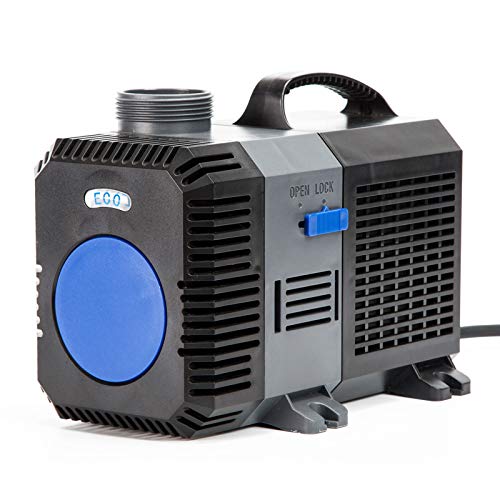
Dynamic Power Submersible Aquarium Pond Pump 16000L/H | Energy-efficient operation, corrosion-resistant stainless steel and PVC, includes two outlet sizes
$120 on AmazonHow to size a waterfall pump (without surprises)
- Measure your vertical lift: From the pond water surface to the spillway/weir lip. This is the biggest component of “head”.
- Plan the route: Every metre of pipe, bend, valve and reducer adds resistance. Use the largest practical hose/pipe (often 32–40 mm) and gentle sweeps to minimise loss.
- Check the pump curve: Look up the model’s flow at your estimated total head (lift + friction). Choose a pump that delivers the look you want at that point, not just its zero‑head figure.
- Add a safety margin: Selecting a pump with extra head and throttling back with a ball valve is far easier than trying to coax more flow from an undersized unit.
- Filter first or direct feed?: If you pass water through a pressure filter/UV before the spillway, expect additional resistance. A filter‑oriented pump with a debris‑tolerant intake is helpful.
Pair your pump with the right spillway hardware for an even sheet. See our guide to stainless steel waterfall spillways. Building new? Choose an appropriate liner and underlay: pond liners in Australia.
Installation and reliability tips for Aussie conditions
- Place the pump off the bottom: Elevate on a pump stand/crate to avoid silt ingestion. Use a prefilter basket or a skimmer to reduce blockages.
- Avoid cavitation: Keep the intake well submerged and free of vortexing. Ensure adequate water depth and clearances around the intake cage.
- Use RCD protection: Always power outdoor pumps from an RCD/safety‑switch outlet with weather‑protected connections.
- Control algae: Waterfall aeration helps, but clarity often needs filtration/UV. Compare options in our UV pond clarifiers & pressure filters guide.
- Summer heat: Look for thermal protection and clean intakes regularly. Consider added air if fish stock is high: pond aeration kits.
- Service access: Leave enough hose slack and unions to lift the pump for maintenance. Keep the intake cage accessible.
Related pond upgrades
- Create a crisp sheet over masonry or cladding with a stainless steel spillway.
- Design or refurbish with the right pond liner and underlay.
- Add clarity control via UV clarifiers/filters.
- Supplement oxygen in warm weather with aeration kits.
- Prefer a display nozzle in a formal pond? See floating pond fountains.
- Deep clean without draining using a pond vacuum cleaner.
- Exploring low‑power ideas for wildlife ponds? Compare solar pond pumps & aerators.
FAQs
How do I estimate total head for a waterfall pump?
Add the vertical lift from pond surface to spillway lip to the approximate friction from hose/pipe length, fittings and any filters. Larger diameter pipe and gentle bends reduce friction, so more of the pump’s flow reaches the spillway.
Is it OK to throttle a waterfall pump with a valve?
Yes. Using a ball valve on the discharge side is a common way to fine‑tune flow. It’s better to slightly oversize your pump and valve it back than to undersize and get a weak sheet of water.
Do I need a prefilter or skimmer with a solids‑handling pump?
Solids‑handling cages help, but a prefilter basket or surface skimmer still reduces clogging and keeps maintenance manageable in leafy Aussie gardens.
What pipe size should I run from the pump to the spillway?
Use the largest practical size the pump outlet and spillway can accept—often 32–40 mm for this flow range. Upsizing reduces friction loss and preserves flow at your spillway.
Can these pumps run saltwater features?
Some models (such as the Dynamic Power 16,000 L/h listed here) state suitability for both freshwater and saltwater. Always check the specific pump’s description for material compatibility before use.
How do I prevent cavitation and noise?
Keep the pump intake fully submerged with clear water around the cage, avoid restricting the inlet, and minimise suction of surface vortices. Ensure adequate pond depth at the pump location.
Should I run the waterfall 24/7?
Most pond pumps are designed for continuous duty and many ponds benefit from constant circulation. If your pump supports continuous operation and protections are in place (RCD, correct wiring, clear intakes), continuous running helps oxygenation and filtration.