
3 Best Robot Lawn Mowers Australia – Quiet, Hands‑Free Cutting for Lawns Under 300m²
Weekends are too short to push a mower around a tiny patch. If your lawn is small and often wet, shady or just annoying to keep neat, a robot mower can quietly trim it every day while you do anything else. For trickier layouts or sloped sections, see our boundary wire and slope guides for extra help: Boundary‑Wire Robot Mowers Compared and Robot Mowers for Sloped Yards.
Quick Picks
- Best Overall: WORX Landroid S (Small‑lawn variant) – Clever app features and tidy edge work in compact Aussie yards.
- Best Budget: Yard Force Compact (Small‑lawn variant) – Simple to live with, reliable cut, good value for tiny lawns.
- Best for Beginners: GARDENA SILENO minimo (Small‑lawn variant) – Very quiet, easy setup and an intuitive app for first‑time owners.
Featured Picks on Amazon Australia

Bosch VisiMow 18V-200 Cordless Robotic Lawnmower (for Lawns Up to 200 m², Cutting Width: 18 cm, Cutting Height: 20-60 mm, Without Battery)
$749 on Amazon
MOVA 600 Robotic Lawn Mower, UltraView Wire-Free Setup and Accurate Mapping Up to 600m², Smart Obstacle Avoidance, App Control, U-Shaped Cutting, Quiet Operation, Safety Alerts
$1189 on Amazon
ANTHBOT Robot Lawn Mower NO Wire - 0.22 Acre, Full Band RTK+4-Eye Vision Robotic Lawnmower, Automatic Mapping, 20 Multi-Zone Management, Accurate Obstacle Avoidance, Intelligent Path Planning
$1179 on AmazonHow these picks were chosen (real‑world small‑lawn criteria)
- Designed for compact lawns (roughly courtyard to small suburban front/back lawns under ~300m²).
- Handles typical Aussie grasses (Buffalo, Kikuyu, Couch) with frequent micro‑cuts for a denser finish.
- Proven navigation in tight spaces, paths and courtyards where escorts, bins and planters get in the way.
- Low noise for close neighbours and late‑evening runs in warmer months.
- Easy blade swaps and good local support/accessories in Australia.
WORX Landroid S (Small‑lawn variant)
Why it stands out:
- Smart navigation and handy app tweaks (edge modes, schedules, multi‑start points on supported models) make it easy to dial in for courtyards and narrow side yards.
- Good edge performance reduces whipper‑snipping along pavers and garden beds.
- Upgrades like off‑limits (virtual exclusion) strips on compatible variants help avoid trampolines or small beds without rewiring the whole boundary.
Real‑world use case: Terraced townhouse lawn with a path down the side and a small alfresco area. The Landroid’s scheduling and corridor handling lets it tidy high‑traffic patches every day without getting lost.
- Pros:
- Refined app control to target heavy‑wear zones.
- Reliable on everyday obstacles like garden furniture feet.
- Solid accessory ecosystem in AU for easy upgrades.
- Cons:
- Setup still needs careful boundary wire placement for crisp edges.
- Frequent cuts are essential on Buffalo/Kikuyu; plan blade changes accordingly.
- Best for: Small suburban lawns with paths, pavers and tight edges where app settings matter.
- Who should avoid: Highly fragmented lawns with multiple isolated sections that would require carrying the mower between areas daily.
Yard Force Compact (Small‑lawn variant)
Why it stands out:
- Straightforward controls and dependable cut quality make it an easy step into robot mowing without overpaying for features you won’t use.
- Good track record for day‑in, day‑out trimming in simple rectangular yards.
Real‑world use case: Small, mostly open rectangle of lawn in a duplex with a few gentle curves. Once the wire is in, it quietly keeps grass at one tidy height with minimal fiddling.
- Pros:
- Good value for small, uncomplicated shapes.
- Low fuss ownership; simple blade swaps.
- Often includes the basics you need to get started.
- Cons:
- Navigation isn’t as tweakable as higher‑end apps.
- Edges still need the occasional trim depending on paving and borders.
- Best for: Budget‑minded buyers with a neat, open patch and few obstacles.
- Who should avoid: Highly irregular layouts with narrow dog‑legs and complex borders that benefit from smarter routing.
GARDENA SILENO minimo (Small‑lawn variant)
Why it stands out:
- Exceptionally quiet operation suits close‑quarter suburbs and late evening runs in warm weather.
- Clean, app‑guided setup and gentle behaviour around garden edges and ornaments.
Real‑world use case: Inner‑city terrace with a compact lawn bordered by planters. The SILENO’s quiet cut and simple scheduling keep neighbours happy.
- Pros:
- Very low noise signature.
- Beginner‑friendly app and setup flow.
- Good support and accessories available in Australia.
- Cons:
- Less aggressive on thick spring flushes; plan a short manual trim at the start of the season if your lawn gets away.
- Edge finish varies with border design; tidy borders help.
- Best for: First‑time robot owners prioritising low noise and easy ownership.
- Who should avoid: Lawns with steep transitions, bumpy tree roots or deep ruts that demand higher‑spec drive systems.
Comparison at a glance
| Product | Best use case | Main advantage | Main limitation |
|---|---|---|---|
| WORX Landroid S (small‑lawn) | Compact yards with edges, paths and tight passages | Feature‑rich app and strong edge performance | Takes time to fine‑tune wire for perfect edges |
| Yard Force Compact (small‑lawn) | Simple rectangles & courtyards on a budget | Reliable daily cut, easy ownership | Fewer advanced navigation tweaks |
| GARDENA SILENO minimo (small‑lawn) | Close neighbours, quiet operation is critical | Very quiet, beginner‑friendly setup | May need a seasonal reset cut if grass surges |
How to choose a robot mower for lawns under 300m²
- Layout first, not just size: Tight side yards, stepping stones and planters matter more than raw square metres. Pick models with corridor or multi‑start features if you’ve got tricky sections.
- Grass type and growth rate: Buffalo and Kikuyu thicken up in warm months. Frequent micro‑cuts work brilliantly, but you’ll change blades more often. Keep spares handy.
- Edging style: Flush pavers let wheels run close so edges look neater. If your beds sit higher than the lawn, expect a quick touch‑up along borders.
- Rain and shade: Many robots handle dew and light rain, but wet thatch can smear. Schedule around heavy irrigation cycles or downpours.
- Security & storage: Choose models with PIN/lock features. A small garage keeps chargers dry and sun off plastics in summer.
- Support & parts in AU: Check blade availability and local service. It’s routine maintenance you’ll actually do.
Setup tips that save hours (Aussie yards)
- Plan the wire on paper first: Mark no‑go zones for garden beds or trampolines. If your model supports virtual strips, use them to avoid re‑laying wire.
- Spend time on edges: A neat wire line around pavers pays back every week with less trimming.
- Shelter the base: A simple cover reduces UV and rain exposure and extends hardware life.
- Sync with watering: Run the mower late arvo or evening, water early morning with a smart timer so the lawn isn’t soggy at mow time. See: Best WiFi Hose Timers or, for in‑ground systems, 24VAC Smart Sprinkler Controllers.
Handy accessories
- Replacement blades (keep a couple of sets):

30 x Titanium Blades Longlife Suitable for All Husqvarna® Automower® / Gardena® Robotic Lawnmower/Suitable for 105, 310, 315, 320, 420, 430x, r40i - (0.75 mm)
$ on Amazon - Boundary wire repair/extension kit:

Headley Tools 200m Universal Lawnmower Boundary Wire Contains 50x Lawn Pegs+10x Wire Connectors+9X Titanium Blades Robotic Lawnmower Wire Compatible with Gardena/Husqvarna/Worx
$100.99 on Amazon - Robot mower garage/cover:
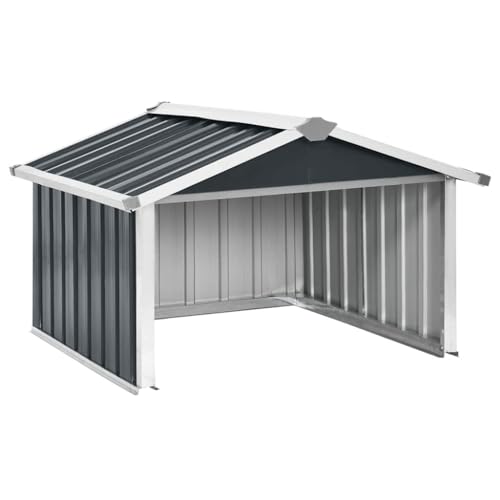
vidaXL Garden Robot Lawnmower Shed Outdoor Backyard Terrace Tool Storage House Shed Garage Shelter 92x97x63 cm Galvanised Steel Anthracite
$138.99 on Amazon
When to upgrade instead
- Lawns growing beyond small size or with steep slopes: Step up to larger or slope‑rated robots. Start here: Robot Mowers for Sloped Yards.
- Want a one‑time reset cut or seasonal renovation: Pair your robot with a small battery mower for the occasional higher cut: Small‑Yard Battery Mowers, or go bigger if you’re expanding: Self‑Propelled Battery Mowers.
- Chasing a denser, greener sward: Consider a light seasonal renovation (aerate, topdress, feed) to complement daily micro‑cuts: Australian Lawn Renovation System.
FAQ – Robot mowers for small Australian lawns
Do I need boundary wire for a small robot mower?
Most models use a boundary wire to define the mowing area and protect beds or paths. It’s a one‑time job if you plan it well. Some variants offer virtual exclusion strips or accessories to avoid re‑wiring small changes later.
Will a robot mower work on Buffalo or Kikuyu?
Yes. These grasses thicken up if you cut a little, often. Expect to swap blades a touch more frequently during spring flushes, and schedule more frequent short runs rather than long, infrequent sessions.
How noisy are they compared to a normal mower?
They’re much quieter than petrol and even most battery push mowers. Many owners comfortably run them in the evening without bothering neighbours.
Can a robot handle my narrow side path?
Look for models that mention narrow corridor handling and set the boundary wire precisely. If your path pinches to a very tight width, create a separate zone or exclude the chokepoint.
What happens when it rains?
Light rain or dew is typically fine; heavy, waterlogged conditions can smear clippings. Use your app schedule to avoid mowing immediately after heavy irrigation or storms.
Do I still need a trimmer for edges?
Yes, but far less often. Flush pavers help the mower get closer. Many owners do a quick edge tidy every few weeks, not every weekend.
How often do blades need changing?
It depends on growth and debris. In warm months with Buffalo/Kikuyu, expect more frequent changes. Keep spares on hand so your schedule isn’t interrupted.
Can one robot mow two separate lawns?
If the sections are connected via a wire‑defined corridor, yes. If they’re truly separate with hard barriers, you’ll need to carry the mower between zones or install a second base.
What about theft and security?
Choose models with PIN or lock features. A small garage reduces visibility, and some variants support anti‑theft notifications.
Is a robot mower cheaper to run than hiring a mower service?
For small lawns, ownership usually wins over time. Electricity use is modest; blades are the main consumable. If you prefer not to DIY setup, factor in a one‑off professional install.
The bottom line
For small Aussie lawns, a well‑set robot mower quietly delivers a consistently neat finish without weekend effort. Pick the navigation and app style that suits your layout, nail the boundary wire once, and keep a few spare blades on hand. If your yard has serious slopes or complex sections, start with our sloped‑yard guide or revisit your edging so your robot can shine.