
Collapsible Rainwater Bladder Tanks Australia: 500–2000L for Garden Irrigation
Need more irrigation water without a massive round tank? Collapsible rainwater bladders slide under decks, along narrow side paths, or in carports, giving you 500–2000L of storage to feed drip zones and hose watering without council drama or cranes.
Quick Picks
- Best Overall: 1000L reinforced PVC bladder — good capacity vs. footprint; suits most suburban irrigation needs
- Best Budget: 500–800L compact bladder — fits tight side access or under small decks; easy entry point
- Best Premium: 2000L heavy-duty bladder — maximises storage for larger gardens and longer dry spells
Best Collapsible Rainwater Bladder Tanks (500–2000L)
Best Overall — 1000L Reinforced PVC Bladder

Weisshorn 1000L Water Storage Bladder Portable Water Tank Container
$77.95 on AmazonWhy it stands out: Around 1000L strikes the best balance for Australian suburban blocks: enough reserve to run a decent drip session or two without dominating space. Typical reinforced PVC with welded seams is tough enough for seasonal filling/emptying and under-deck use when properly supported.
Real-world use case: One or two mixed drip zones (hedges + pots) on a twice-weekly schedule, topped up from 40–60 m2 of roof area in coastal/metro rainfall.
- Pros: Practical capacity; manageable weight/footprint; common 3/4–1" outlets suit garden pumps; easy to stow when empty
- Cons: Needs a smooth, level base; not for potable use unless clearly stated; vulnerable to sharp debris if base prep is poor
Best for: Most homeowners wanting reliable irrigation top-ups without installing a rigid poly tank.
Who should avoid: Large gardens needing multi-day autonomy between rains — consider 1500–2000L instead.
Best Budget — 500–800L Compact Bladder
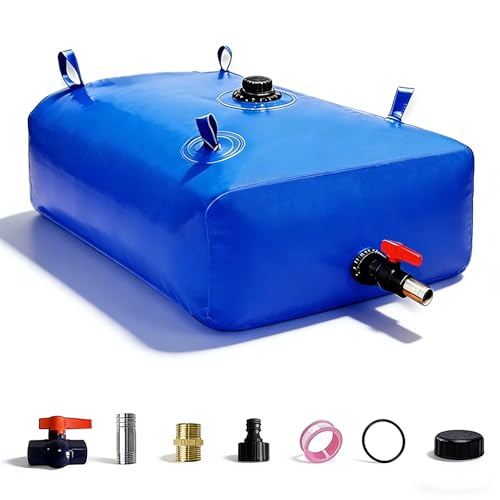
142 Gal/540 L Portable Large Capacity Water Storage Bladder Containers, Foldable Water Bladder Tank, Camping Garden Drought Resistance Agricultural Irrigation Outdoor RV Emergency Water
$84.7 on AmazonWhy it stands out: Fits where nothing else will — narrow side yards, under low decks, or beside a shed. Smaller fittings are usually simple to plumb to a hose or compact pump. Great starter volume for renters or first-time rain capture.
Real-world use case: One hedge drip line or routine pot watering with a hose-end timer; occasional top-ups through dry spells.
- Pros: Lowest upfront cost; easy to handle; fast fill from small roof sections; minimal visual impact
- Cons: Limited run time for sprinklers/rotors; refills more often; less buffer during heatwaves
Best for: Tight spaces and light-to-moderate irrigation loads.
Who should avoid: Anyone running multiple garden zones or lawn rotors — step up to 1000L+.
Best Premium — 2000L Heavy-Duty Bladder
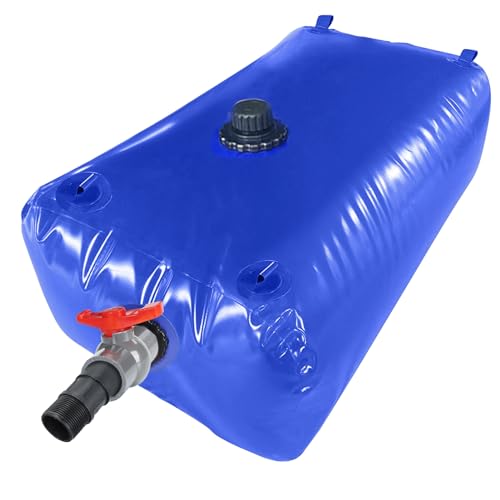
Large Capacity Water Storage Bladder 2000 Litre Foldable PVC Tank Camping
$77.58 on AmazonWhy it stands out: Maximises storage in a low-profile footprint. Ideal when you want 2–4 watering sessions banked between rains. Often built from thicker PVC or reinforced fabric with larger outlets for higher flow pumps.
Real-world use case: Larger gardens with multiple drip circuits or a combination of drip + micro-sprays where autonomy and fewer mains top-ups matter.
- Pros: Longest runtime; fewer refills; supports higher flow; strong drought buffer
- Cons: Needs more level area and careful base prep; heavier when full; plan overflow routing
Best for: Bigger plantings, extended dry periods, or households targeting maximum mains-water savings.
Who should avoid: Very small sites without a suitable, level, protected footprint.
Do Collapsible Bladder Tanks Suit Aussie Gardens?
Yes — especially where space or access blocks a rigid tank. Bladders are low-profile, quick to deploy, and perfect for irrigation top-ups. They’re not a structural substitute for round/slimline poly tanks, but for garden watering they’re brilliant.
- Slide under decks, stairs, or along side returns
- Seasonal: pack away empty when wet season arrives
- Low visibility and minimal council impact compared to large fixed tanks
Planning a full rainwater-to-irrigation stack? See our rainwater tank to irrigation automation guide and how to connect tanks to smart drip systems.
How to Size: 500 vs 1000 vs 2000L
Estimate your irrigation draw
- Drip hedges/borders: ~2–4 L/h per emitter. 50 emitters = ~100–200 L/h
- Micro-sprays: 20–60 L/h per head
- Small lawn rotors: 5–12 L/min per head (high draw; tanks empty fast)
Rule of thumb: Aim for 1–3 typical watering sessions in storage. For example, a 1000L bladder comfortably runs a 200 L/h drip zone for several hours, or two shorter sessions across a warm week.
Key Buying Factors for Australian Conditions
- Material & build: Reinforced PVC or TPU with welded seams resists abrasion; UV-stable outer helps under open decks.
- Fittings: Commonly 3/4–1" outlet; larger outlets suit higher-flow pumps. Look for secure caps, vent, and a simple overflow path.
- Footprint: Confirm filled dimensions. Allow extra for hoses, elbows, and safe access.
- Base prep: Level, smooth, and cushioned. Use compacted crusher dust + outdoor carpet/rubber mat or geotextile.
- Overflow management: Direct to garden or stormwater where compliant. Avoid pooling under the bladder.
- Use case: Non-potable garden use unless stated otherwise by the manufacturer.
Automating the system? Explore complete irrigation automation and filter/regulator kits for drip.
Installation Checklist (Quick)
- Choose location: Shaded if possible; under-deck is ideal. Ensure service access.
- Prepare base: Level, debris-free, with a protective mat or geotextile to prevent abrasion.
- Plumb inlet: From downpipe with a leaf screen and (optionally) a first-flush diverter.
- Connect outlet to pump: Short, kink-free suction line with a sediment pre-filter before the pump.
- Route overflow: Safe discharge away from structures; comply with local rules.
- Pressure/automation: After the pump, add your filter-regulator stack and timer/controller.
For changeover to mains on-demand, see automatic rain-to-mains valves.
Plumbing Add‑Ons (Optional but Recommended)
- Garden pressure pump: Delivers steady pressure to drip/sprays. Pair with a controller if needed.
- Sediment pre-filter: Protects pump and valves from grit coming off roofs/gutters.
- Drip filter-regulator kit: Ensures clean, pressure-regulated flow for emitters.
Need help choosing controls? Compare Wi‑Fi hose timers or step up to 24VAC smart sprinkler controllers. For pump logic, see tank pump controllers compared and variable‑speed garden pumps. Add monitoring with flow meters and leak detection.
Capacity Selection at a Glance
| Capacity Class | Best Use Case | Main Advantage | Main Limitation |
|---|---|---|---|
| 500–800L | Tight spaces; single drip line or regular pot watering | Lowest cost and footprint | Shorter runtime; more frequent refills |
| 1000–1200L | General suburban gardens; 1–2 drip zones | Balanced storage vs. space | Still limited for lawn rotors |
| 1500–2000L | Larger beds/hedges; longer gaps between rains | Longest autonomy; supports higher flow | Needs careful base prep and planning |
Maintenance & Safety
- Keep clean: Maintain gutter guards and leaf screens; flush first-flush devices if fitted.
- Inspect base and edges: Check for abrasion points each season; re-level if needed.
- Algae control: Opaque bladders reduce light; keep hoses shaded and purge stagnation before use.
- Winter: In cold regions, avoid freezing; drain if risk is high.
- Potable caution: Treat as non‑potable unless product is explicitly certified for drinking water.
Frequently Asked Questions
Can a bladder tank run sprinklers or only drip?
Drip is ideal. Small lawn rotors can work with a suitable pump, but water draw is high, so 500–1000L tanks empty quickly. For regular sprinkler use, consider 1500–2000L.
Do I need a pump?
Yes for most systems. Gravity may run a slow soaker line, but a garden pressure pump gives stable flow for emitters and valves.
What base should I put under a bladder?
Level, compacted ground (or pavers/decking) with a protective mat or geotextile. Remove sharp stones; protect edges from rubbing.
How do I connect gutters?
Use a downpipe diverter with leaf screening. Add a first‑flush device if debris is an issue. Provide a safe overflow path.
Can I place a bladder under a deck?
Yes if there’s enough height and access. Ensure airflow to minimise condensation, keep it out of direct sun, and protect from screws or timber edges.
Is the water safe for edibles?
Use for soil irrigation, not foliar sprays, and only from non‑toxic roofing materials. Treat as non‑potable unless certified otherwise.
How long will 1000L last?
It depends on flow. A 200 L/h drip zone gets ~5 hours. Split across sessions to reduce runoff and improve soak.
What about automating watering?
Pair the pump with a filter‑regulator and a smart hose timer or 24VAC controller. See our guides to Wi‑Fi hose timers and smart controllers.
Can I integrate mains backup?
Yes — an automatic rain‑to‑mains changeover keeps irrigation running when the tank is low. See our changeover guide.
Next Steps
Pick the capacity that matches your weekly irrigation draw, prep a safe base, and add a compact pump + filter/regulator. For end‑to‑end setups, start with rainwater to irrigation automation and pump controller options.