
Electric Chainsaw Sharpeners Australia: Best Bench‑Mounted Grinders
Blunt chains waste time, wood and batteries/fuel. A good bench‑mounted electric chainsaw sharpener gives you consistent angles and fast turnaround at home, which matters for Aussie landowners clearing stormfall, landscapers on deadlines, and firewood crews. This guide compares the best bench‑mounted grinders available to Australian buyers, explains who each suits, and shows the key features to get right before you buy.
Quick picks
- Oregon 520 professional bench grinder – built for frequent sharpening and multiple chain types.
- Oregon 410 compact bench grinder – reliable home and farm unit for regular use.
- VEVOR bench‑mounted chainsaw sharpener – budget‑friendly choice for occasional sharpening.
At a glance: comparison
| Product | Best suited to | Why consider it |
|---|---|---|
| Oregon 520 professional bench grinder | Frequent users, multiple saws/chains | Pro‑grade build, precise adjustments, supports common pitches with the right wheels |
| Oregon 410 compact bench grinder | Home, acreage and farm maintenance | Trusted brand, straightforward setup, consistent sharpening for regular use |
| VEVOR bench‑mounted chainsaw sharpener | Occasional users on a budget | Affordable entry into bench sharpening with angle adjustability |
Oregon 520 professional bench grinder
Why it stands out: Oregon’s pro bench grinders are widely used in workshops thanks to their consistent angle control and durable construction. If you sharpen often or carry multiple chain types, this platform’s adjustment range and accessory wheel support make it easier to standardise results across different chains.

Oregon Professional Chainsaw Sharpening Device, Compact 230-Volt Bench Grinder, Universal Chain Saw Sharpener, Electric, for All Chainsaw Chains (520-230)
$607.08 on AmazonKey specifications
- Bench‑mounted electric chain grinder
- Adjustable top‑plate and down‑angle settings
- Compatible with common chain pitches when paired with suitable wheels (confirm the included wheel sizes before purchase)
- Designed for repeatable, consistent sharpening
Practical suitability
Great fit for acreage owners, contractors and workshop setups maintaining several saws. Combine it with a simple chain rotation routine and a reliable primary saw to keep cutting performance high between bigger maintenance intervals.
Limitations
- Higher upfront cost versus light‑duty units
- Heavier and less portable than file‑guided solutions
Verdict
Choose the Oregon 520 platform if you need workshop‑grade repeatability and flexibility for multiple chain types. It’s a long‑term buy for frequent sharpeners.
Oregon 410 compact bench grinder
Why it stands out: A dependable, easier‑to‑approach bench grinder for homeowners and farm users who still want the accuracy of a fixed setup. It offers the core angle adjustments most users need without the extra weight or cost of larger platforms.
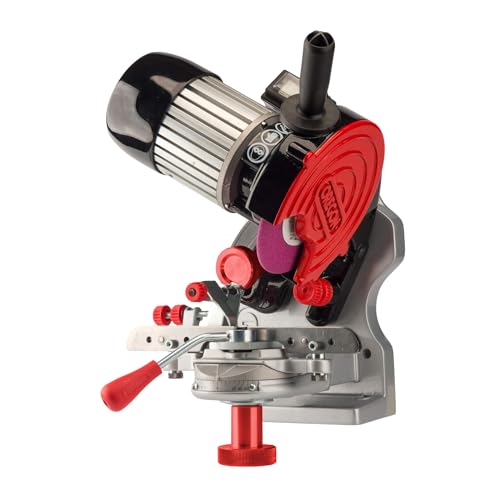
Oregon Professional Chainsaw Sharpening Device, Compact 230-Volt Bench Grinder, Universal Chain Saw Sharpener, Electric, for All Chainsaw Chains (410-230)
$402.49 on AmazonKey specifications
- Bench‑mounted electric chainsaw sharpener
- Angle‑adjustable head and chain vice
- Works with common chain sizes when using the correct grinding wheels (check the listing for included wheels)
- Compact footprint for home workshops
Practical suitability
Ideal for users sharpening a few chains per month across a couple of saws. If you manage hedging and pruning with compact pruning saws and keep a mid‑size battery or 240V setup, this brings your sharpening in‑house reliably.
Limitations
- Not as feature‑rich as larger professional models
- Still requires correct wheel selection for each chain pitch
Verdict
A balanced choice for regular home and farm maintenance where accuracy and simplicity matter more than heavy‑duty throughput.
VEVOR bench‑mounted chainsaw sharpener
Why it stands out: A cost‑effective, adjustable bench grinder for occasional sharpening. If you’re stepping up from hand filing and want consistent angles without a big spend, this is an approachable starting point.
Oregon Professional Chainsaw Sharpening Device, Compact 230-Volt Bench Grinder, Universal Chain Saw Sharpener, Electric, for All Chainsaw Chains (410-230)
$402.49 on AmazonKey specifications
- Bench‑mounted electric sharpener with adjustable grinding angles
- Typically supports common chain sizes; verify wheel sizes and inclusions on the product card
- Suited to lighter‑duty workloads
Practical suitability
Great for the occasional firewood cutter who wants faster, cleaner results than basic guides. Pair with smart PPE habits and keep the chain maintained between sharpenings using correct bar oiling and tension checks.
Limitations
- Build and components are oriented to light/medium use
- Angle repeatability depends on careful setup and clamping
Verdict
If you sharpen now and then and want a budget bench solution, this is a sensible entry.
How to choose a bench‑mounted chainsaw sharpener
1) Match your chain sizes
Most bench grinders can service common pitches (such as 1/4", .325, 3/8" and .404) with the correct grinding wheels. Confirm the wheel sizes supplied and what you may need to add. If you run multiple saws, ensure the grinder can accommodate your full range.
2) Angle control and repeatability
Look for easy, positive detents or clear scales for top‑plate angle, vice tilt and head tilt. Repeatability matters more than speed for most home users. Professional units typically offer finer control that saves time over many chains.
3) Wheel availability and dressing
You’ll periodically dress the wheel to keep profiles clean. Make sure compatible wheels and dressing stones are easy to source in Australia. Premium wheels can improve finish and reduce heat glazing when you’re sharpening frequently.
4) Build, clamp and ergonomics
A stable vice, smooth head travel and a rigid chassis reduce chatter and help consistency. If you sharpen often, small conveniences (clear guards, accessible controls, and easy chain indexing) add up.
5) Heat management and technique
Use light, controlled passes and avoid lingering. Overheating can temper cutters and shorten chain life. Practice on a retired chain until your movements are consistent, then move to your main chains.
6) Don’t forget rakers
After multiple sharpenings, check depth gauges with a proper tool and take them down as required. It’s the difference between a chain that looks sharp and one that actually feeds well. If you’re upgrading your cutting kit, also see our electric log splitter guide and pole saw buyers guide.
Who should upgrade to a bench grinder?
- Frequent users: If you’re running a saw weekly, a bench grinder pays back in time and accuracy.
- Multiple saws/chains: Standardise angles across different chains quickly.
- Inconsistent results from files: A fixed setup helps remove guesswork.
For occasional pruning and yard clean‑ups with small saws, see our mini cordless chainsaw guide and the broader battery chainsaws roundup. If you’re managing large storm clean‑ups or removals, understanding tree removal and emergency cleanup costs can help plan your gear mix.
FAQs
What wheel sizes do I need?
Grinders often ship with wheels suited to common chain sizes. If you run multiple pitches, you may need additional wheels. Check the product card for included wheel diameters and keep a dressing stone on hand to maintain their profile.
Will a bench grinder work for low‑profile (LP) chains?
Generally yes, with the correct wheel and angle settings. Always confirm the grinder’s compatibility with your exact chain type and follow the chain manufacturer’s angle guidance.
Can I sharpen depth gauges (rakers) on the same grinder?
Many users set raker height separately using a dedicated depth gauge tool and flat file for precision. Some grinders can touch rakers, but a purpose tool helps avoid taking too much.
Is a bench grinder better than a file guide?
For consistency across many chains, yes. File guides remain handy for trail work and quick touch‑ups. A bench‑mounted unit is best for full refreshes back in the shed.
How often should I sharpen?
Any time cutting throws dust instead of chips, the saw pulls to one side, or you’ve struck dirt or wire. Light, frequent touch‑ups are better than heavy grinds.